
Sharp Knives Are Safer: How to Hone, Sharpen, and Store Your Edge
A dull knife is dangerous because it slips. Here's the practical difference between honing and sharpening, how often to do each, and how to store an edge so it lasts.
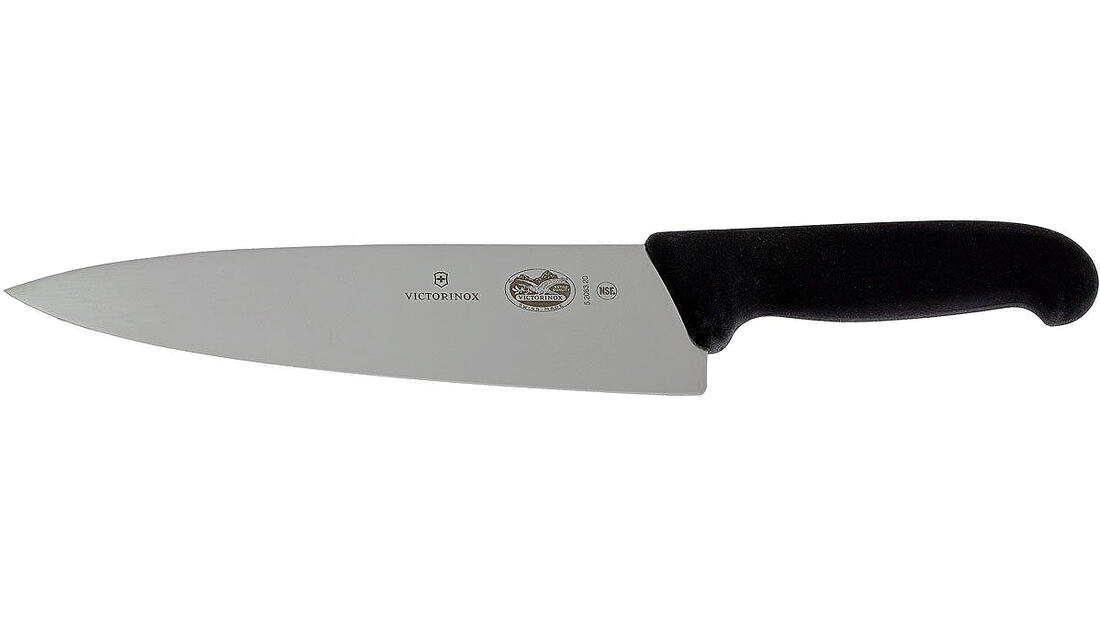
It sounds backwards, but a sharp knife is safer than a dull one. A sharp blade goes where you aim it; a dull one slips, forcing you to press harder, which is exactly how people cut themselves. Keeping a knife sharp isn't about chef vanity — it's about control. And it's mostly two habits: honing often, and sharpening occasionally.
Honing vs sharpening: not the same thing
This is the confusion that keeps knives dull. A honing rod (the steel) does not sharpen. It straightens. The thin edge of a knife folds slightly with use; honing realigns that folded edge back to center, restoring the feeling of sharpness without removing metal. Sharpening, by contrast, removes metal to create a fresh edge. You hone frequently (every few uses) and sharpen rarely (a few times a year).
How to hone
- Hold the rod vertically with the tip on a cutting board, or horizontally in front of you.
- Place the heel of the blade against the rod near the handle, at about a 15–20° angle to the rod.
- Sweep the blade down and toward you, drawing it across the rod so the whole edge contacts it, from heel to tip.
- Switch sides and repeat. Four to six strokes per side is plenty for maintenance.
Consistent angle matters more than speed or pressure. A 15° angle gives a sharper but more delicate edge (Japanese style); 20° is more durable (Western style). Pick one and keep it consistent.
When to sharpen
When honing no longer brings the edge back — the knife slides off a tomato skin instead of biting in — it's time to sharpen. Options:
- Whetstone: the gold standard. Soak, then sharpen at your chosen angle across coarse then fine grits. Best results, takes practice.
- Pull-through sharpener: fast and foolproof, decent for home use. Less precise than a stone, but far better than a dull knife.
- Professional sharpening: once or twice a year for your good knives, especially if you're nervous about the stone. Cheap insurance for a knife you like.
How to store an edge so it lasts
Knives go dull faster from bad storage than from use. Banging against other utensils in a drawer destroys the edge. Use a magnetic strip, a knife block with slots that fit, or blade guards. Never drop a good knife loose in a drawer. And never put it in the dishwasher — heat, detergent, and rattling all damage the edge and the handle.
The real safety payoff
A sharp knife bites into the food, so the cut is predictable. A dull knife slides, you compensate with force, and the blade arrives somewhere you didn't intend. Sharpness isn't sharp-for-its-own-sake; it's the cheapest safety upgrade in the kitchen.
For the cutting technique that goes with a sharp edge, our Cooking Reference covers basics, and ask the chef can walk you through prep for any ingredient.
Photo: Victorinox Fibrox chef's knife, Wikimedia Commons (CC BY-SA 4.0).