
Knife Skills That Actually Matter: The Moves Every Home Cook Should Own
Focus on the five knife techniques that reduce prep time and improve results. Skip the fluff, skip the chef-school performance, focus on what works.
You do not need twenty knife techniques. You need five done correctly and fast. One sharp knife, a stable cutting board, and the habit of a proper grip will improve your cooking more than any gadget.
Most home cooks use two knives — a large chef knife and a small paring knife. That covers 90% of kitchen tasks. A serrated bread knife handles the rest. Skip the specialty knives until you can justify them through daily use.
Before Technique: The Setup
One sharp knife beats every technique. A dull knife requires more force, which causes slipping, which causes injury. You are safer with a razor-sharp blade because it moves through food with minimal pressure.
- Use a honing steel before each session to realign the edge (10–15 strokes per side).
- Sharpen with a whetstone, electric sharpener, or professional service every 2–4 months depending on use.
- Damp paper towel under your cutting board — stops it from sliding, costs nothing.
- A cutting board at the right height. If you are tall, a thicker board or a low stool makes a real difference to your shoulders over a 30-minute prep session.
Five Techniques Worth Mastering
1. The Claw Grip (Safety and Speed)
Curl your non-cutting hand's fingertips under, using your knuckles as a guide for the knife blade. Thumb and pinky behind the fingers, gripping the food. The knife rides against your knuckles, never reaching your fingertips. This is not optional — it is the foundation.
Practice by cutting a carrot into planks, then sticks, then dice. The pieces do not need to be uniform while you train your hand. Consistency comes with repetition.
2. The Rock Chop (Herbs, Garlic, Onions)
Keep the tip of the chef knife on the cutting board. Raise and lower the heel in a rocking motion while feeding food under the blade with your claw hand. This is fundamentally faster than lifting the whole blade for each cut.
For herbs: gather them into a tight pile, rock-chop finely, then turn 90 degrees and repeat. Two passes give you a fine mince without bruising the leaves into paste.
3. Roll Cut (Irregular Roots and Stalks)
For carrots, parsnips, daikon, angled vegetables: cut at a 45-degree angle, roll the vegetable 90 degrees, cut again at 45 degrees. Produces evenly-sized pieces with more surface area for even cooking. Common in stir-fries. Looks professional, takes five minutes to learn.
4. Bias Cut (Long Strips, Stir-Fry Vegetables, Garnishes)
Cut at a steep diagonal — roughly 60 degrees from the axis of the vegetable. Produces wider, more elegant cross-sections than straight cuts. Common with green beans, scallions, carrots for presentation-focused dishes. Also exposes more surface area for faster cooking.
5. Wash-and-Slice Fruit Technique (Avocado, Mango, Stone Fruit)
Avocado: slice lengthwise around the stone, twist to separate, tap the stone with the heel of the knife and twist to remove, score the flesh in its skin, scoop with a spoon. Do not slice toward your palm holding the avocado half — score against the cutting board.
What to Skip Until Later
- Tourne (seven-faced potato cut). Restaurant theater that saves no time.
- Chiffonade with a single fast stroke. Stack leaves, roll tight, slice thin — slow and careful beats fast here.
- Speed contests. Speed comes from consistent practice, not rushing.
Buying Your First Serious Knife
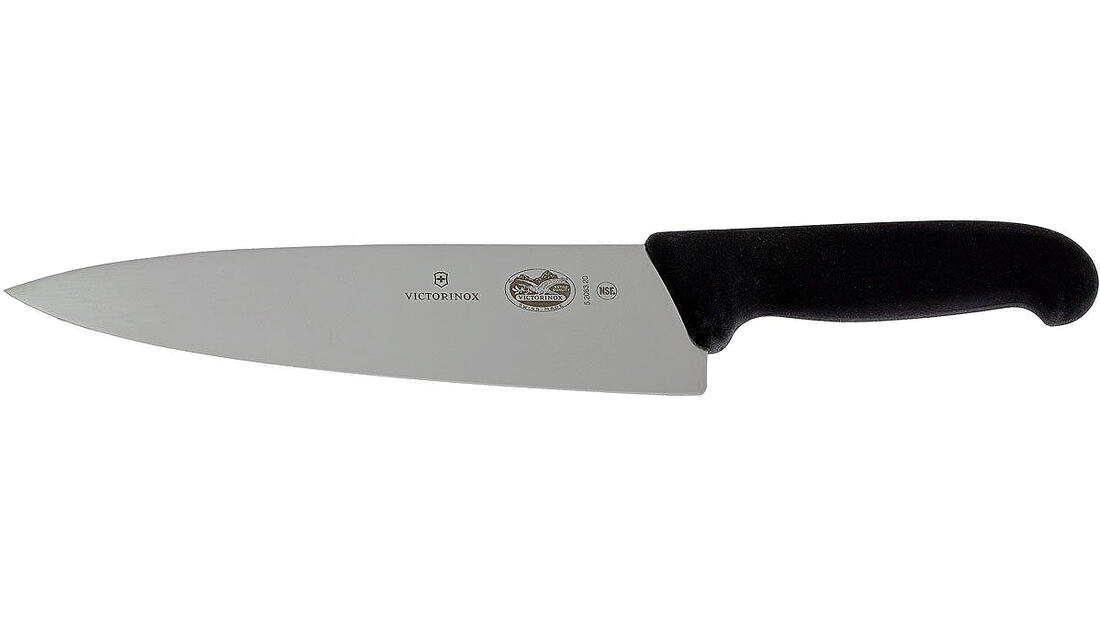
You do not need to spend $150. A Victorinox Fibrox 8-inch chef knife ($35–45) consistently outperforms knives three times its price in professional kitchen tests. It holds an edge well, survives bad treatment, and feels balanced enough to use for years.
Pair it with a Victorinox 3.5-inch paring knife ($8–10). Total investment under $60 for tools that will last a decade with basic care.
Pick one this week. Cook with it daily for a month. Learn the rock chop. Learn the claw grip. These two changes alone will make you measurably faster and more confident in the kitchen.
What your food actually costs
Once you can prep efficiently, the next lever is knowing your real ingredient costs. The Recipe Cost Calculator breaks down any recipe to cost per serving — useful when you want to compare the real price of cooking versus ordering in.
What is the one knife you reach for most often? Share your pick in the comments.