
How to Rescue Over-Salted, Overcooked, or Burnt Food (Real Fixes)
Don't throw it out yet. Practical, real fixes for over-salted, overcooked, and slightly burnt food — what works, what's a myth, and when to start over.
Every cook ruins food sometimes. The difference between a good cook and a panicked one is knowing which mistakes are recoverable and which aren't. Here are the fixes that actually work — and the myths to stop believing.
Over-salted soup, sauce, or stew
The potato trick is a myth: a raw potato absorbs some salt along with water, but not enough to matter, and you've now got a starchy potato in your sauce. The real fixes dilute or balance:
- Dilute. Add unsalted liquid (water, stock, crushed tomato) and rebuild the seasoning. The only reliable fix for genuinely over-salted liquid.
- Bulk it out. Add more of the main ingredient (more rice, more vegetables, more beans) without adding salt. Works for stews and one-pot dishes.
- Add fat or dairy. A swirl of cream, a dollop of yogurt, or butter coats the tongue and softens the perception of salt without removing it. Great for soups and curries.
- Add acid or sweetness. A squeeze of lemon or a pinch of sugar competes with saltiness on the palate. It doesn't fix the salt, but it makes it tolerable.
Overcooked, dry meat or chicken
You can't un-cook it, but you can hide the dryness. Slice thinly against the grain, toss with a moist sauce (the resting juice, a pan sauce, mayo, yogurt, gravy), and serve it where the sauce does the work — in a sandwich, a wrap, over rice, or folded into pasta. Overcooked meat is fine as a filling; it's only sad when served alone and dry.
Slightly burnt food
If only the bottom is charred, you can often save the top: transfer the unburnt portion to a clean pan immediately, and don't scrape the burnt layer. For a sauce or stew with a burnt edge, pour off the unburnt top without stirring — stirring folds the bitter burnt flavor through the whole pot. A tiny pinch of sugar can mask a faint smokiness, but truly burnt is bitter and should be cut away or started over.
Lumpy gravy or sauce
Don't whisk harder. Pour it through a fine strainer, or hit it with a blender or immersion blender. A smooth sauce from a lumpy one takes 20 seconds; the texture was the only problem.
Broken (split) sauce or emulsion
Hollandaise, vinaigrette, or a butter sauce that separates can usually come back: whisk a splash of warm water or lemon juice in a clean bowl, then drizzle the broken sauce in slowly while whisking. You're rebuilding the emulsion around a new drop of water. It works more often than people expect.
When to start over
- Truly burnt-through food (the bitterness is in everything).
- Food that's unsafe (undercooked poultry, spoiled ingredients).
- A sauce you've "rescued" three times — at some point a fresh start is faster and better.
If you're not sure whether a dish is salvageable or how to fix it, ask the chef can suggest a rescue based on what went wrong and what you have on hand.
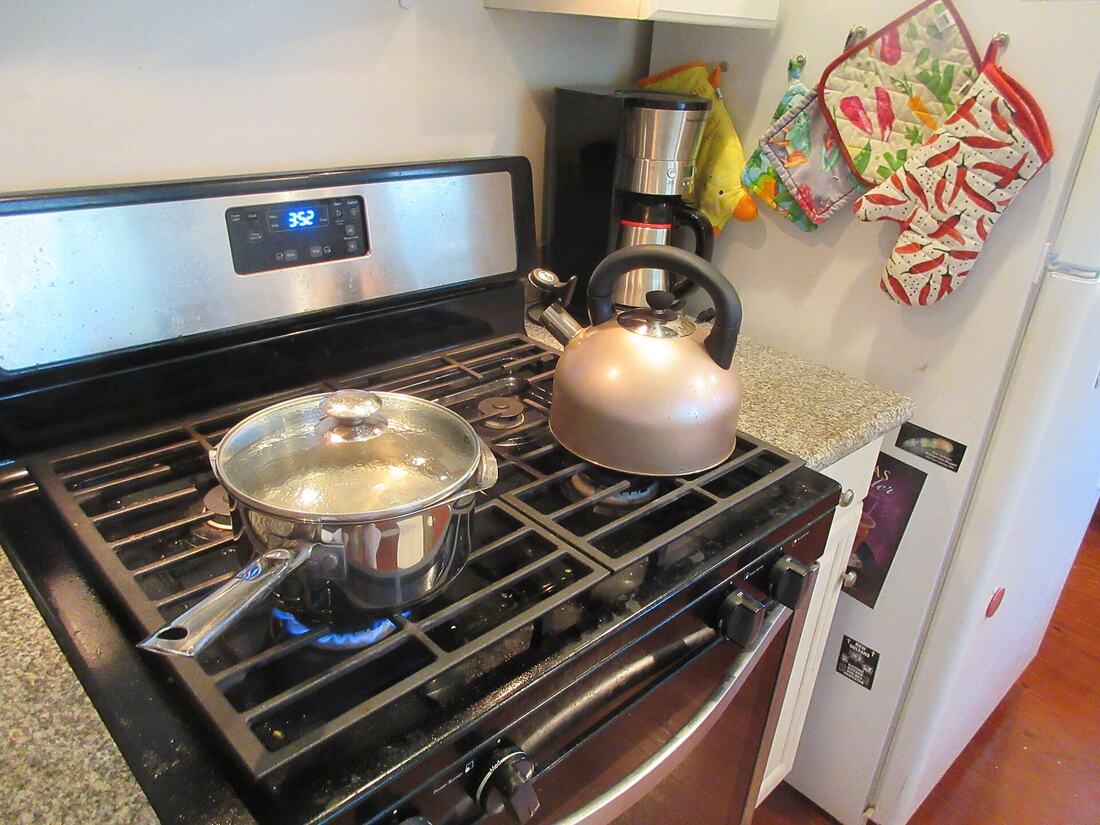
Photo: Home kitchen range with pot and kettle, Wikimedia Commons (CC BY-SA 4.0).