
Bread Hydration: The Percentage That Makes or Breaks Your Dough
Hydration is the single most informative number in bread baking. Learn what 55% vs 80% dough means for crumb and crust — and use the calculator to build any recipe.
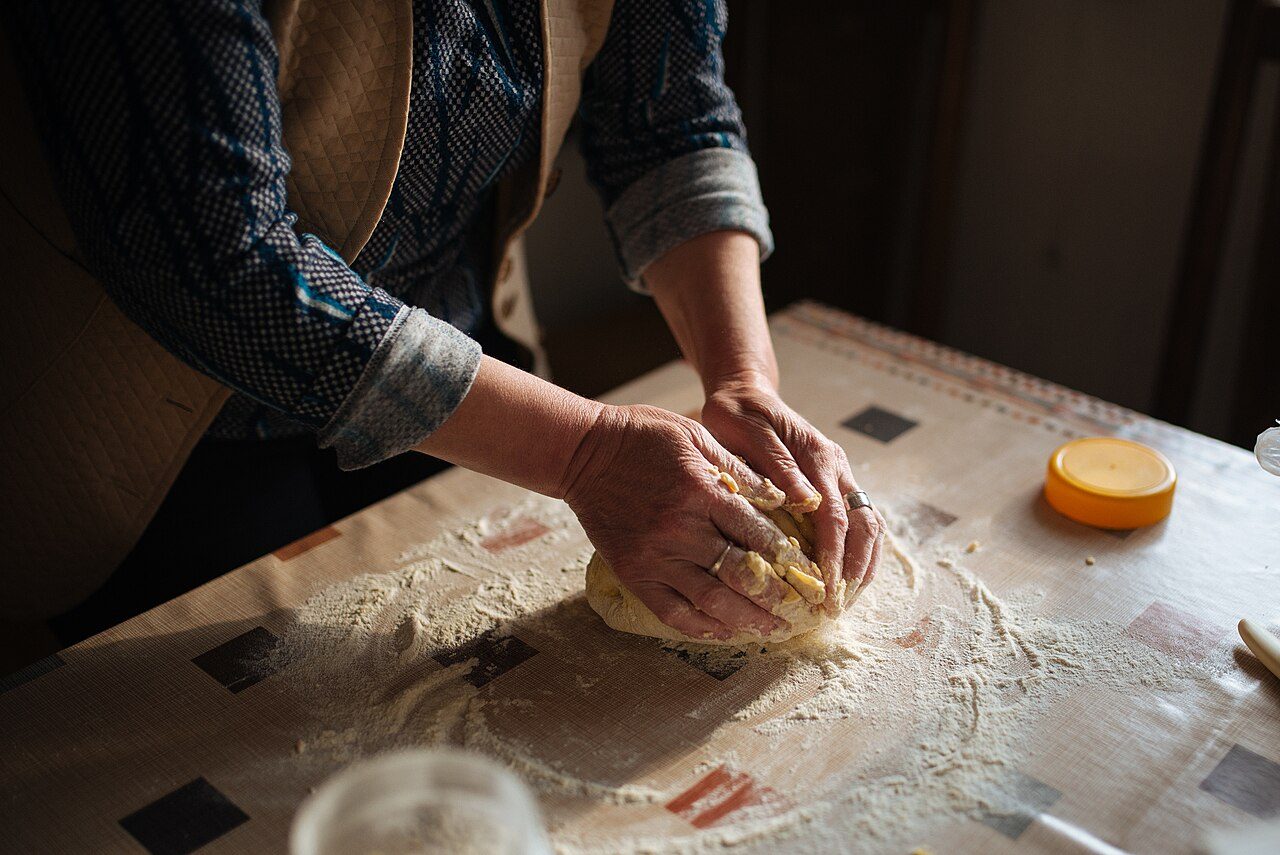
Ask a baker how a recipe is built and you will get percentages, not cups. The most important one is hydration: the weight of water divided by the weight of flour, expressed as a percentage. A dough at 55% hydration and a dough at 80% hydration have completely different crumb, crust, handling, and flavor development — yet the only difference in the recipe is water. Once you can read hydration, you can read any bread recipe in the world.
What the number means
Hydration = water ÷ flour × 100. A 65% dough means 650 g of water for every 1000 g of flour. It is a baker's percentage: everything is measured relative to flour, which is why professional recipes scale to any batch size without arithmetic.
- 50–57% — firm dough. Baguettes, pretzels, shaped breads. Easy to handle, chewy, tight crumb.
- 58–65% — standard. Sandwich loaves, pizza bases, flatbreads. The everyday range.
- 66–75% — high hydration. Ciabatta, focaccia. Wet and sticky; big, open crumb.
- 76%+ — very high. Rustic country loaves. Glue-like at first, transformed by folds into an airy, custardy crumb.
Try it — set the flour weight and hydration:
The calculator also shows the 2% salt and 1% instant yeast you will usually want alongside — those two are the rest of the standard formula.
Not all flour absorbs the same
Hydration is only meaningful for the flour you actually have. Bread flour absorbs noticeably more water than all-purpose because its stronger gluten network traps more of it; whole-wheat flour absorbs even more, which is why whole-wheat recipes sit higher in the percentage. If you switch flours in a recipe, expect to adjust the water by 5–10% — the recipe's percentage is a starting point, not a law.
High hydration is a technique, not a problem
A 75% dough looks like a disaster for the first ten minutes. It isn't. The gluten network develops through time and folds, not through kneading: every 30 minutes, stretch the dough up and fold it over itself, four times total. By the third fold it will hold its shape. Wet your hands rather than adding flour — extra flour is how sticky dough becomes tough bread.
What changes when the dough is wetter
- Crumb: higher hydration = larger, more irregular holes. The steam inside the dough opens the crumb during baking.
- Crust: wetter doughs take longer to set a crust, which means more oven spring and a thinner, crisper shell.
- Flavor: hydration speeds fermentation slightly, and a more open crumb means more browning — more Maillard flavor on the crust.
- Handling: wet dough is hard to shape. Use a bench scraper, generous flour on the work surface, and no fear.
The key takeaway: hydration is the master dial of bread. Firm for structure, high for air and crust — and always weigh your water, because percentages only work when the measurements do.
For the rest of the formula — flour, fat, sugar, and leavener ratios — baking ratios cover the system. And when a loaf comes out wrong, ask the chef: describe the crumb and the recipe, and you will usually get the exact fix.
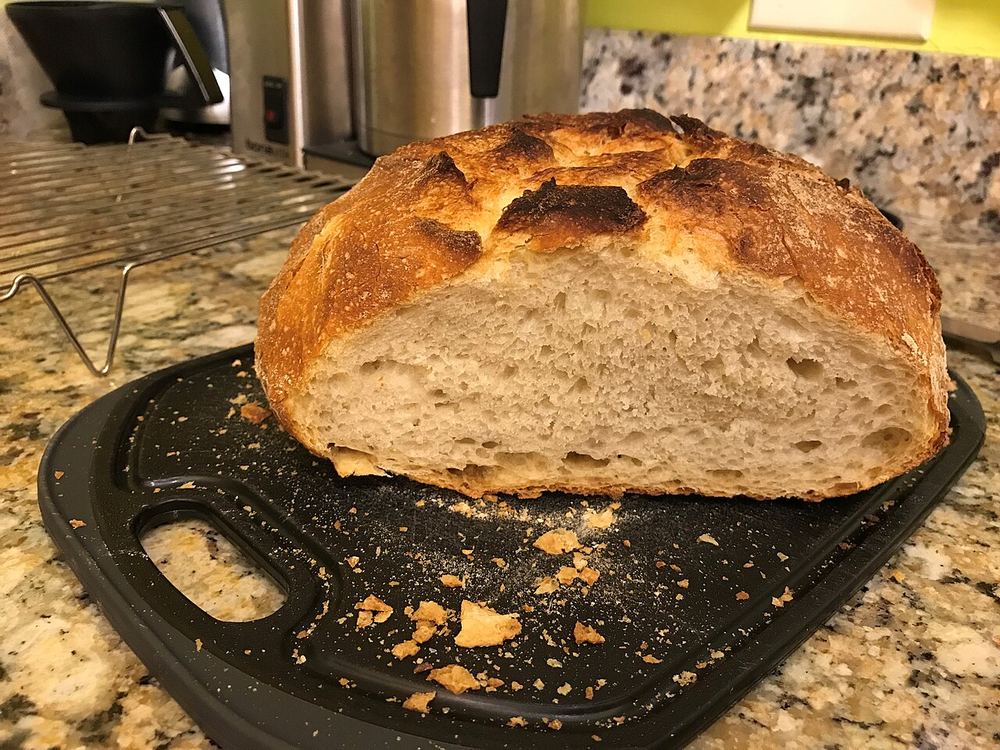
Photos: Kneading dough by Shixart1985 (CC BY 2.0) and sliced sourdough loaf (CC0), Wikimedia Commons.