
Baking Ratios: Why Memorizing Weights Beats Following Recipes
Baker's percentages and core ratios for bread, muffins, pie dough, and pancakes. Understand why professional bakers think in weights, not cups.
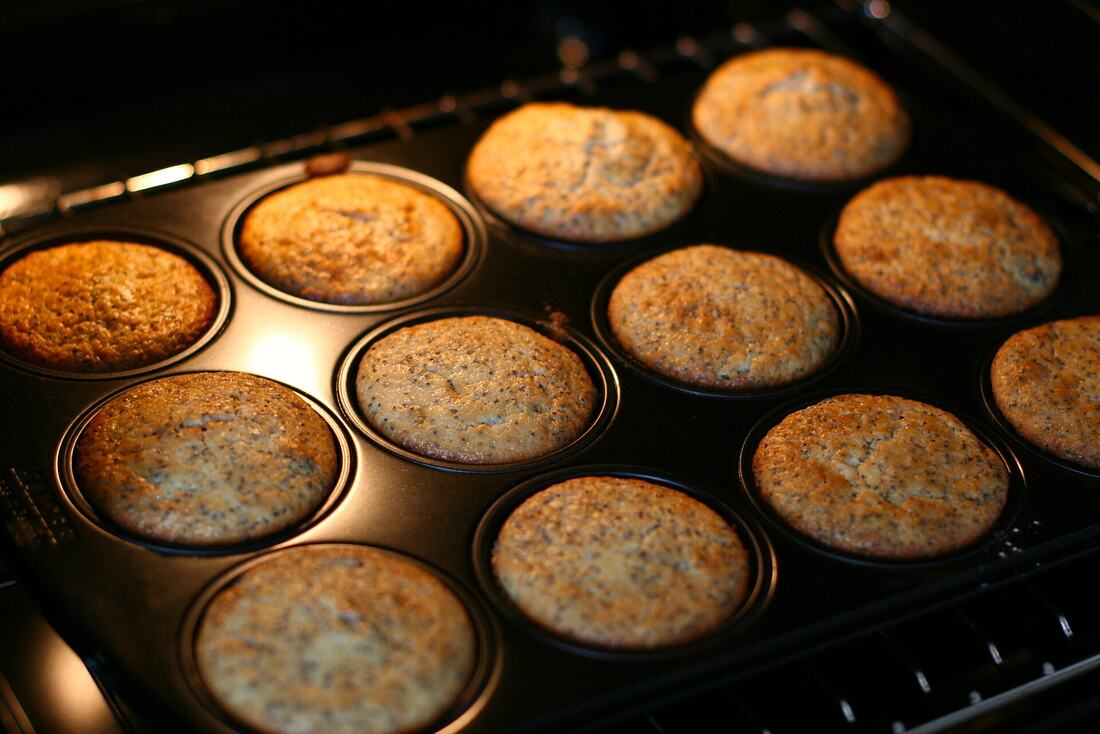
Professional bakers do not use recipes the way home cooks do. They memorize ratios of flour-to-liquid-to-fat and adjust on the fly. The result is flexibility, consistency, and dramatically less cleanup from measuring cups. Once you understand baker's percentages and a handful of core ratios, you stop needing recipes entirely for most basic baking.
Why Weight Beats Volume
One cup of all-purpose flour weighs 120–150 grams depending on how you scoop, the humidity, and the brand. A cup of white sugar is 200 grams. A cup of brown sugar is 220 grams. These are not equivalent measurements, and the variance compounds across a single recipe.
A $15 digital kitchen scale with 1-gram precision removes all of this error. It takes a flat 10 seconds to tare a bowl, pour in flour to the target weight, tare again, add water. This is objectively faster than scooping and leveling five measuring cups. If you do one upgrade for your kitchen this year, make it a scale.
Baker's Percentages in Plain Language
Baker's percentages define all ingredients as a ratio of flour weight. Flour is always 100%. Then:
- Water at 60% means: for every 100g flour, use 60g water.
- Salt at 2% means: for every 100g flour, use 2g salt.
- Butter at 50% means: for every 100g flour, use 50g butter.
This scales naturally. 500g flour at 60% hydration needs 300g water. 250g flour needs 150g water. The ratio holds at any quantity.
Core Ratios to Memorize
Bread Dough (Lean)
- Flour 100%
- Water 60–70% (higher = more open crumb, harder to handle)
- Salt 2%
- Instant yeast 0.5–1%
500g flour, 350g water, 10g salt, 3g yeast. Knead, rise 1 hour, shape, rise 45 min, bake at 230°C/450°F.
Muffins and Quick Breads (Muffin Method)
- 2 parts flour
- 2 parts liquid (milk, buttermilk)
- 1 part egg
- 1 part fat (butter, oil)
By weight: 200g flour, 200g milk, 100g egg (2 large), 100g melted butter. Add sugar and flavorings to taste. Mix wet into dry just until combined — overmixing creates tough, tunnel-filled muffins.
Pie Dough
- 3 parts flour
- 2 parts fat (butter, lard, or mix)
- 1 part water (by weight, ice cold)
300g flour, 200g cold butter, 100g ice water Plus 1 teaspoon salt. Handle minimally. Visible butter flakes in the dough = flaky crust. Work the dough into a smooth paste = tough crust. The person who handles pie dough least wins.
Pancake / Batter
- 2 parts flour
- 2 parts milk
- 1 part egg
- ½ part melted butter
- Leavening: 1 tsp baking powder per 100g flour
Rest the batter 10 minutes before cooking. Gluten relaxes, starch absorbs, and you get more tender results. Pancakes are better with a little patience.
Cookies (Creaming Method)
- 3 parts flour
- 2 parts butter
- 1 part sugar
This 3:2:1 ratio is the base for shortbread and many drop cookies. Cream butter and sugar until light and fluffy (3–4 minutes), add eggs, fold in flour. Adjust sugar and add-ins to change style without breaking structure.
When This Matters Most
Ratios matter when scaling up for a crowd, scaling down for one meal, or substituting flours. If you know a lean bread is 65% hydration, you can calculate any quantity in seconds. If you only know a recipe for 1 loaf at 500g flour, you are stuck with one size.
Beyond Memorizing: Learning to Feel
Hydration percentages are precise, but dough is tactile. A 65% hydration dough in humid August behaves differently than the same dough in dry January. Experienced bakers adjust water down 5% on dry days, up 5% on humid days. Pay attention to how the dough feels — slightly tacky but not sticky, smooth surface, holds shape when stretched thin enough to see light through (windowpane test). That feel is the final arbiter.
Start with one ratio. Make it four times over two weeks. Adjust hydration by 5% each batch and note the difference. Within a month you will have one recipe replaced by one ratio, and you will never think about that recipe the same way.
Do you bake by weight or volume? Tell us what changed when you made the switch.
Related Tools
Put these ratios into practice with the Kitchen Unit Converter for cup-to-gram conversions, or the Recipe Scaler to multiply any recipe using these rules — complete with the smart spice curves that prevent over-seasoning.