
How to Scale Any Recipe: The Rules Most Cooks Learn Too Late
The simple rules for scaling any recipe up or down. Why spices do not scale linearly, how to handle egg fractions, which pan to use, and when to adjust baking time.
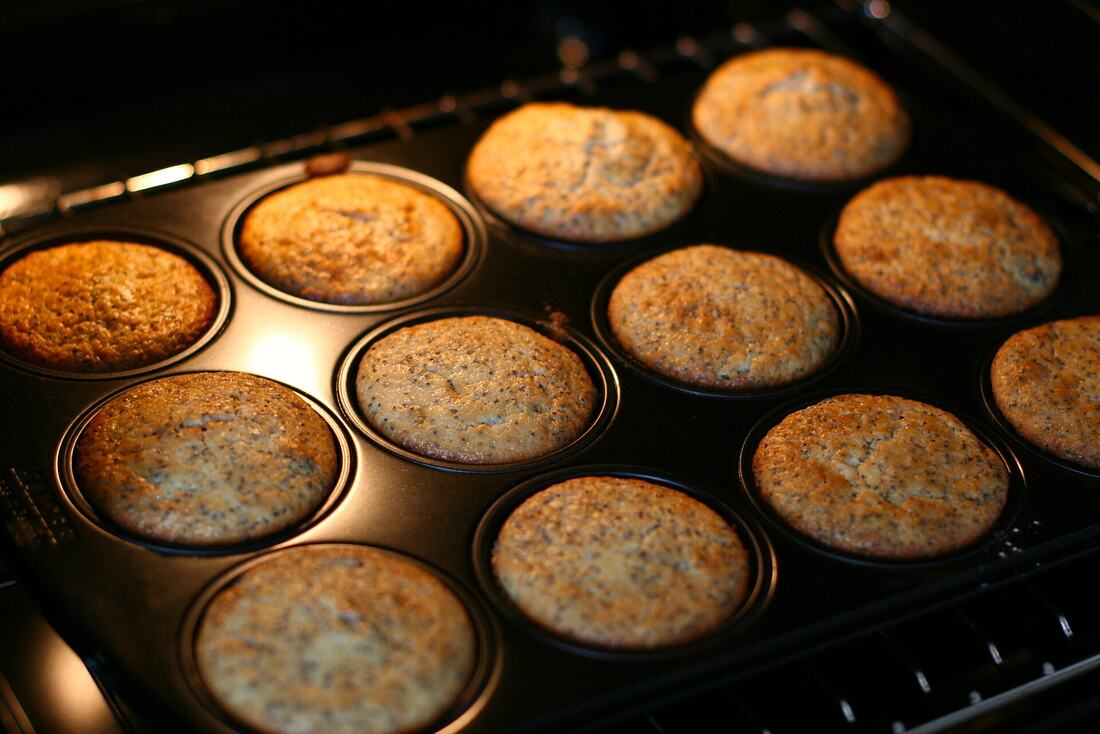

Every home cook has doubled a recipe for a dinner party and ended up with either too little or enough to feed a battalion. Halving a recipe for one or two feels even worse — especially when it calls for one egg and you need half of it, or a pinch of spice becomes a mathematical puzzle. The trick is not working harder. It is learning three simple rules and one curve.
The Straight Multiplier Works for Most Things
Start with the obvious: to change a recipe from 4 servings to 6, multiply everything by 1.5. Servings from 4 to 10 is 2.5×. From 6 to 3 halve it. This linear scaling works for flour, butter, milk, sugar, oil, most proteins, and stock. It is correct for eighty percent of ingredients.
The math is simple. Divide your target servings by the original servings to get the multiplier. Apply it to every quantity in the recipe. Done.
The Three Exceptions: Spices, Leavenings, Eggs
The other twenty percent of ingredients do not scale linearly. Treating them linearly is why doubled curries taste like hot cinnamon paste and why halved muffins turn out dense and sad.
1. Spices and strong seasonings
Double a recipe and doubling the salt is fine. But doubling cayenne, cinnamon, cocoa, oregano, or clove is a mistake. Spices intensify non-linearly — two teaspoons of chili powder does not taste twice as spicy as one. It tastes harsher, more bitter, and more one-dimensional.
The rule: scale spices at roughly the square root of your multiplier. Doubling the recipe (2×) means multiply spices by about 1.6, not 2. Tripling (3×) means about 2× the spices, not 3×. Small batches get the same curve reversed — halving the recipe means taking slightly more than half the spice rather than exactly half. The aroma should be present, not painful.
2. Leavenings (baking powder, baking soda, yeast)
These scale closer to linearly than spices, but there is a ceiling. A doubled batch of muffins needs all the baking powder doubled. A ten-times batch of bread does not always need ten times the yeast — yeast is a living organism that multiplies. For most home-scaling (2× to 4×), scaling leavenings linearly is fine. Above that, scale at 0.85× instead.
3. Eggs at small scales
This is the classic frustration. Halve a recipe that calls for one egg and you need half an egg. The solving trick: crack the egg into a small bowl, whisk it until uniform, then remove half by weight (25g out of a typical 50g large egg). If you bake often, keep a small kitchen scale near your prep area specifically for this. It eliminates every egg-fraction problem permanently.
Pan Size Changes Everything
Scaling the recipe is only half the equation. The other half is picking the right vessel.
Doubling a brownie recipe and using the same 8×8 pan forces you to bake a twice-as-deep slab. The edges overcook while the center stays underdone. The fix: move pan.
Here are common swaps and their multipliers:
- 8×8 inch square to 9×13 inch rectangular: 1.8× the ingredients (close to doubling).
- 9-inch round pan to 10-inch round: 1.25× ingredients (not 11% — area grows by radius squared, so 10 is 25% larger in area than 9).
- 9×5 loaf pan to 8×4 loaf: reduce by about 35%.
- Two 9-inch round layers instead of one: exactly 2× the batter.
A round pan's area is calculated with π × r². This means a small change in diameter creates a surprisingly large change in area. Always think in terms of area, not inches across.
Baking Time Does Not Double
When you scale a recipe up, baking time increases, but never linearly. Doubling a sheet cake adds maybe fifteen to twenty percent to the time. Doubling the depth of a cake adds roughly thirty to forty percent. The visual cues matter more than the clock: golden edges, a center that springs back, a clean toothpick. Trust the toothpick, not the minutes on the timer.
The opposite happens when scaling down. A half batch of cookies bakes at the same temperature for slightly less time. But a large batch at 2× may need a small temperature increase (10–15°F) to help the center set before the exterior toughens.
A Practical Workflow
Here is the step-by-step that works every time for volume scaling:
- Calculate your multiplier (target servings ÷ original servings).
- Multiply flour, butter, sugar, milk, oil, protein by the full multiplier.
- Multiply spices and seasonings by the square-root multiplier (roughly 0.6 exponent).
- Multiply leavenings by the multiplier, or by 0.85× if beyond 3× scaling.
- Measure egg fractions by weight.
- Pick a pan that keeps the depth close to the original (compare areas).
- Set a timer for 110–120% of the original time on first attempt, then test early.
Professional bakeries use baker's percentages for this — every ingredient defined as a ratio of flour weight. Once a recipe is in those terms, scaling to any quantity is a three-line calculation. But for home cooking, the workflow above handles ninety-five percent of cases accurately enough.
The Easiest Path: Let a Tool Do the Math
Our Recipe Scaler takes a recipe and converts every quantity using the rules above. Spices get the dampening curve automatically. Egg fractions get clean weights. Pan swaps get their exact area ratio so you do not have to remember πr² off the top of your head. Paste your recipe, set the servings, and it does the conversion in a fraction of a second. No math, no mistakes, no leftover half-eggs.
If you need to switch between cups and grams after scaling, the Kitchen Unit Converter handles that with ingredient densities built in. Together they cover every scaling-and-conversion problem a home cook runs into.
What is the largest batch you have ever tried to cook? Tell us the scaling problem it gave you.