
Resting Meat: The 10-Minute Step That Makes Steak and Roasts Juicy
Cut a steak the moment it leaves the pan and you lose the juice. Resting meat is the free, effortless step that keeps roasts and steaks tender. Here's how long and why.
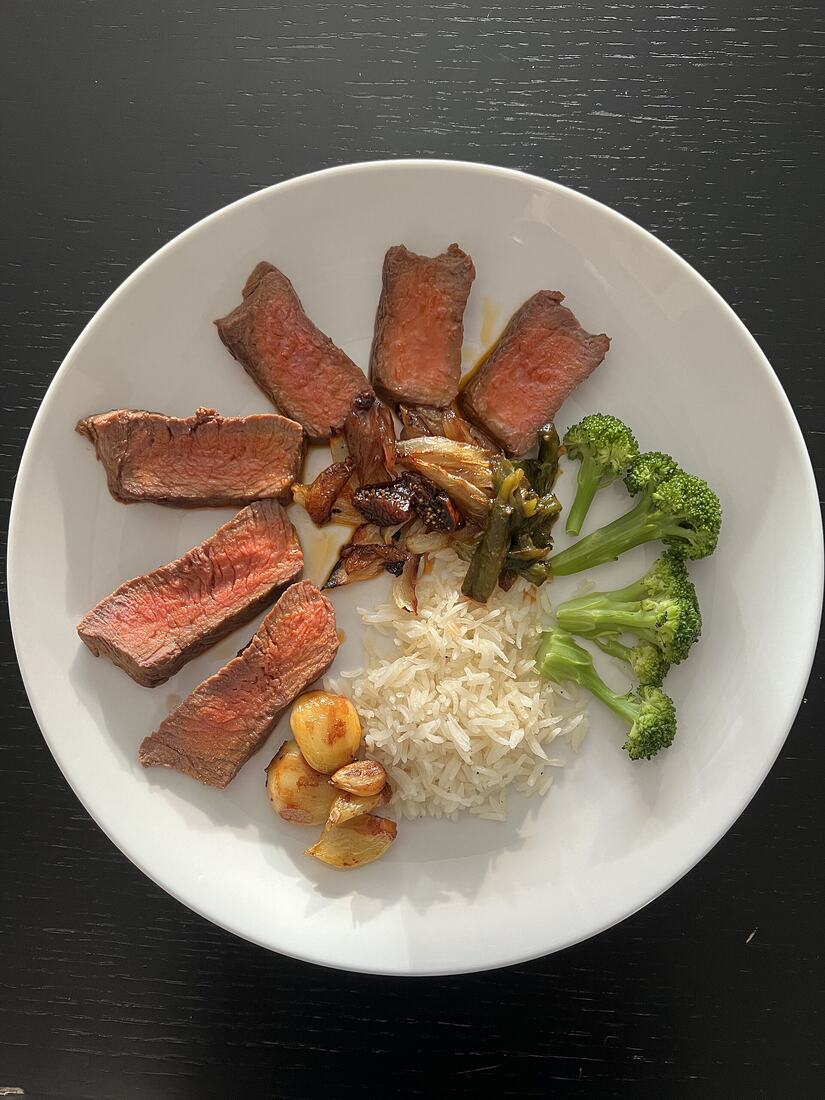
You seared the steak perfectly. A beautiful crust, a sizzling pan, a hungry table. So you slice straight into it — and a flood of red juice pours onto the board. The steak on the plate is now dry. The flavor is on the cutting board. You did everything right and still lost the result, because you skipped the cheapest, easiest step in cooking: resting the meat.
What resting actually does
Cooking drives the juices toward the center of the meat, where it's coolest, and tenses the muscle fibers. Slicing immediately lets those fibers contract and squeeze the liquid out like a wet sponge. Resting lets the temperature even out and the fibers relax, so the juice redistributes and stays inside when you cut. It's not magic — it's physics, and it's free.
How long to rest
- Steaks and chops: 5 minutes for thin, 10 for thick. Loosely tent with foil, not wrapped tight (you'll keep steaming it).
- Roasts (chicken, pork, beef): 10–20 minutes depending on size. A big roast can rest 30. The bigger the mass, the longer the carryover and the longer the rest it needs.
- Whole birds: 15 minutes minimum. The internal temp keeps climbing while it rests, which is why you pull a chicken at 160°F (71°C), not 165.
Carryover cooking: pull it early
Meat keeps cooking off the heat — the center can rise another 5–10°F (3–6°C) while it rests. If you cook a steak to your target temp in the pan, by the time it rests it's overcooked. Pull it a few degrees before your target and let the rest finish the job. This is why a thermometer is more reliable than a timer.
The one mistake that ruins the rest
Cutting to "check if it's done." Every poke is a leak. Use a thermometer in one spot, or learn the finger test, but don't keep slicing to peek. And don't rest on a cold plate — a cold surface pulls heat out fast and the juices don't redistribute as well. Rest on a warm board or a rack over a tray to catch any juice (which you can pour back over the sliced meat).
What to do with the resting juice
That liquid on the board isn't lost flavor — it's concentrated. Pour it over the sliced meat, or whisk it into the pan sauce. Some of the best "gravy" you'll make is just resting juice plus a splash of wine and butter in the still-hot pan.
For exact target temperatures by protein and doneness, the Cooking Reference has the numbers, and ask the chef can time a rest for whatever cut you're cooking.
Photo: Steak with rice, garlic and broccoli, Wikimedia Commons (CC BY-SA 4.0).