
Mise en Place: The One Kitchen Habit That Changes How You Cook
Mise en place isn't a chef's affectation — it's the single habit that turns chaotic cooking into calm, confident cooking. Here's how to actually do it.
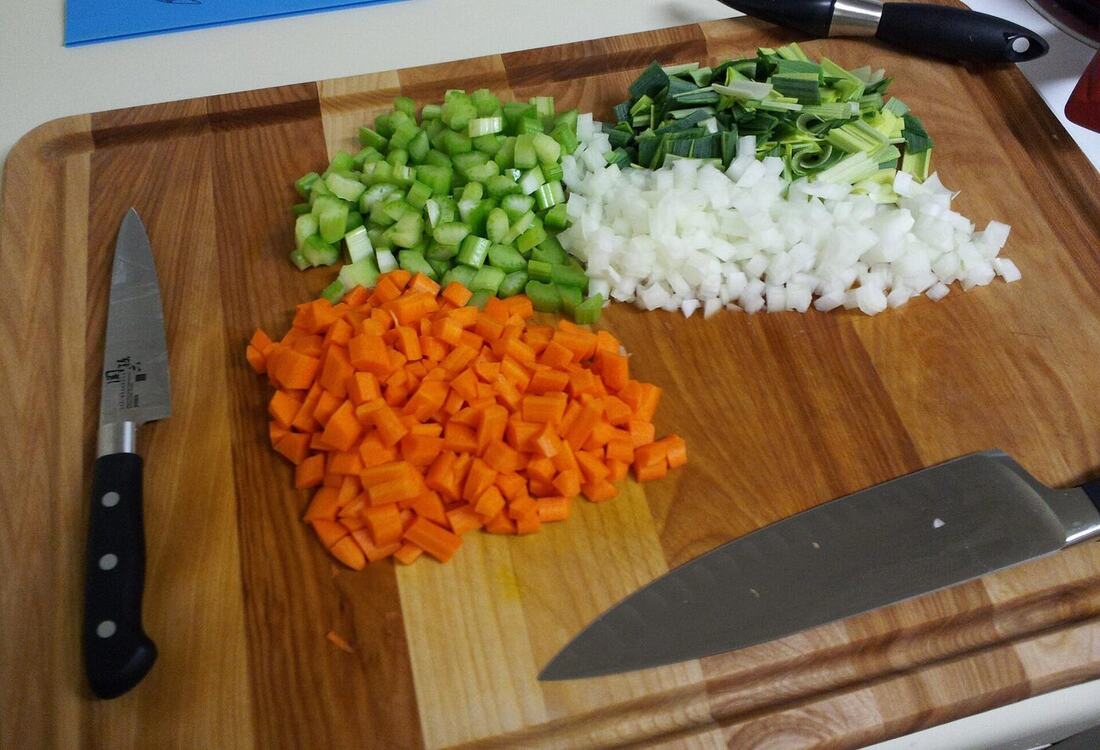
Watch a line cook during a busy service and you'll notice something: they rarely look rushed. The pans are hot, the tickets are stacking up, and yet their hands move with a calm, almost boring precision. The reason isn't talent. It's a habit called mise en place — "everything in its place" — and it's the single biggest difference between cooking that feels like a fire drill and cooking that feels like flow.
What mise en place actually means
It is not about having matching glass bowls or a tidy Instagram counter. It means you do the thinking and the chopping before the heat is on. By the time a single ingredient hits the pan, every vegetable is cut, every spice is measured, and every sauce is ready in a little dish. You cook the dish. You don't assemble it while it burns.
Why it changes everything
Most kitchen disasters are timing disasters, not flavor disasters. The garlic scorches because you were grating cheese. The onion overcooks because you were hunting for the paprika. Mise en place removes the scramble: when everything is prepped and within arm's reach, you can actually watch the food and respond to it.
It also reveals the structure of a recipe. Once you lay the ingredients out, you see the order of operations — what gets sweated, what gets bloomed, what finishes at the end. You start to understand why a recipe works, not just what to do.
How to actually do it (in 4 steps)
- Read the whole recipe first. Not halfway. All the way through. Notice the moments that demand speed — "add immediately," "serve at once." Those are your mise en place triggers.
- Prep in order of use. Cut the things that go in first, and set them closest to the stove. This sounds obvious and almost nobody does it.
- Group by stage, not by ingredient. The aromatics for the start go together; the garnish for the end stays over by the cutting board, out of the splash zone.
- Keep a garbage bowl. One bowl for peels and trimmings, wiped clean after. It saves a dozen trips to the bin and keeps the cutting board clear.
The 15-minute rule for weeknights
If full mise en place feels heavy on a Tuesday, use the 15-minute version: set a timer, prep only the things the recipe calls "immediate" or "next," and leave anything added later for the lull while something simmers. You get 80% of the calm for a fraction of the setup.
Make it a system, not a one-off
The cooks who keep mise en place aren't more disciplined — they've just made it the default. Prep bowls live next to the cutting board. A bench scraper lives within reach. The garbage bowl is always there. When the setup is permanent, the habit becomes automatic.
Once the scramble is gone, you can pay attention to the part that actually matters: making the food taste good. When you're ready to apply this to a specific recipe, ask the chef can walk you through the prep order for whatever you're cooking.
Photo: Mirepoix on a cutting board, Wikimedia Commons (CC BY-SA 3.0).