
Cooking Without Recipes: The Ratios Framework That Frees You From Instructions
Learn core cooking ratios — dough, stock, vinaigrette, pie dough, cookies, risotto — and you stop needing most recipes. Practical guide to building food with structural confidence, using whatever's in your kitchen.
A recipe is a conversation you have until you understand what it's really saying. Once you do, you stop reading it. "350°F for 25 minutes" becomes "bake until springy." "Two cloves garlic" becomes "enough that the pan smells right."
Cooking without recipes isn't magic. It's a set of ratios — reproducible proportions of ingredients by weight — that you can lean on regardless of what's in your fridge. Learn eight ratios and you unlock thousands of dishes that would otherwise require a recipe search.
Why Ratios Beat Recipes
The professional cooking world has used ratios for decades. Michael Ruhlman's Ratio (2009) documented most of them, and European baking traditions long before that. The appeal is scalability and independence: memorize the ratio and you never need to look at the card.
The Eight Ratios That Unlock Home Cooking
1. Vinaigrette — 3 fat : 1 acid
Three parts oil to one part acid (vinegar, citrus juice, verjus). Add salt and an emulsifier — a dab of mustard or crushed garlic — and shake in a jar. Variations:
- Dijon mustard — stable emulsification, classic French
- Soy sauce + rice vinegar — Asian-style, add sesame oil
- Honey + lemon — softer, brighter, works on grain salads
- Anchovy + red wine vinegar + garlic — bold enough for kale and cabbage
2. Pancake and batter — 2 liquid : 2 flour : 1 egg : ½ fat
By volume: 2 cups liquid (milk, plant milk, or buttermilk), 2 cups flour, 1 egg, 2 tablespoons melted butter, 2 teaspoons baking powder, ½ teaspoon salt. Scale up or down without rewriting anything.
3. Pie dough (pâte brisée) — 3 flour : 2 fat : 1 water
By weight: 300g flour, 200g cold butter, 100g ice water. The secrets are in technique: cold fat cut into flour until pea-sized pieces remain, ice water kneaded in just until it holds, wrapped and rested in the fridge 30+ minutes before rolling. Also works with leaf lard (flakiest) or a butter-lard blend.
4. Cookie dough — 3 flour : 2 fat : 1 sugar
A shortbread is just 3 parts flour, 2 parts butter, 1 part sugar by weight. Mix cold butter into flour, add sugar, press into a pan. Bake 350°F (175°C) until pale gold. Vary add-ins without adjusting the ratio. Note: this ratio yields a crumbly shortbread. Chewy cookies need more sugar and egg; thin-crisp more butter.
5. Bread dough (lean) — 5 flour : 3 water
Baker's percentage: 100% flour (500g), 60% water (300g), 2% salt (10g), 1% yeast (5g). Mix, knead 8-10 minutes, rise until doubled, shape, rise again, bake at 425°F (220°C) with steam. This produces a free-form loaf (boule), a pizza dough, a calzone, or a focaccia (same dough plus olive oil in the pan) — all from one ratio.
6. Risotto — 3 liquid : 1 rice
For 1 cup of arborio or carnaroli rice: 3 cups of hot stock, added ½ cup at a time while stirring. Toast the rice first in fat. Add a splash of wine if you have one. Finish with Parmesan and off-heat butter. Taste for doneness at about 18-20 minutes.
7. Stock — bones + mirepoix + water to cover
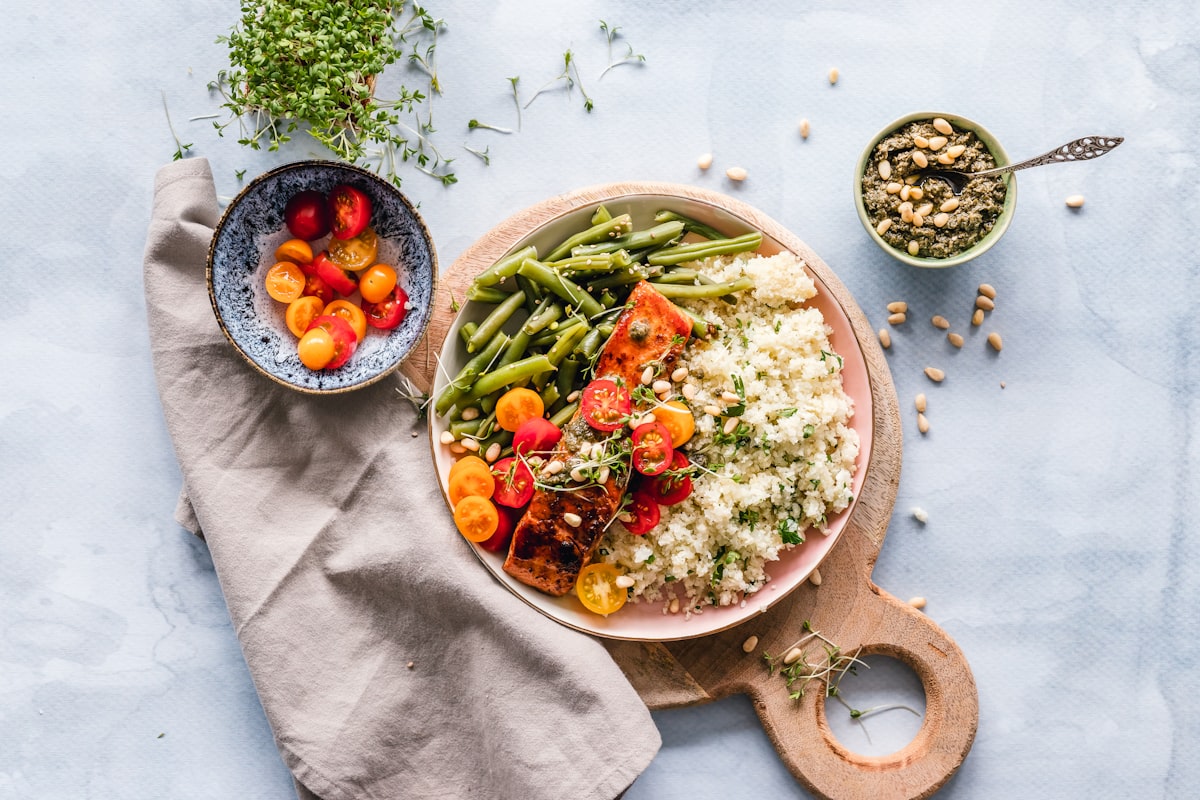
Fill a pot with bones, add mirepoix (2 onion : 1 carrot : 1 celery by volume), cover with cold water by 2 inches, bring low. Simmer 4-12 hours. Strain. The improv version: freeze scraps (celery leaves, carrot peels, onion ends, mushroom stems, Parmesan rinds, parsley stalks) in a bag and when full, start a pot.
8. Pan sauces — roux base or deglaze alone
Beurre blanc: 1 tablespoon butter off heat, whisk in 2 tablespoons acid (white wine, vermouth, lemon juice). Emulsifies into glossy classic sauce. Works on fish, chicken, asparagus.
Roux: 1 tablespoon butter + 1 tablespoon flour = 1 cup milk or stock. Melt butter, add flour, cook 1 minute, add liquid, whisk. Every cheese sauce, gravy, and velouté at home starts here.
Deglaze alone: After searing meat, pour liquid (wine, stock, or water) into the hot pan. Scrape fond with a wooden spoon. Reduce 2-3 minutes. Add cold butter off heat to emulsify.
The Mindset Shift
Ratios don't replace technique. You still learn what simmering versus boiling looks like, what ready dough feels like, what a properly seared surface smells like. What ratios do is remove the anxiety of "am I measuring correctly?" — they provide a structural backbone correct regardless of scale. Your senses handle the fine judgement.
What to Memorize Today
- Vinaigrette 3:1 — used at least 4x weekly in most home kitchens
- Bread 5:3 — unlocks pizza, focaccia, bread, calzone from one ratio
- Pie dough 3:2:1 — pie crust, tart shell, hand pies — every pastry case
With these three, you can come home, take stock of what's in your kitchen, and start cooking within 5 minutes of deciding. Recipe sites become reference instead of requirement.