
Cooking on a Budget in 2026: 8 Strategies That Actually Save Money
Groceries are expensive in 2026. These eight concrete strategies — from pantry-first shopping to strategic protein substitution — actually reduce weekly food costs without eating like a college student.

Grocery prices in 2026 are up 25-30% from three years ago. Eggs, poultry, produce, and pantry staples all climbed. The usual advice — buy generic, cook from scratch, meal plan — is correct but vague. This guide gets specific.
Eight strategies that save real money weekly. Not eating rice and beans seven days a week. Actual food people want to eat.
1. Shop Your Pantry First — Literally
Before making a meal plan, open the pantry, fridge, and freezer. Write down what you already have. Then plan meals around those items. This isn't a tip. It's the foundational discipline that makes everything else work.
Most households have $50-150 of unused food in the back of cabinets at any given time. A single pantry audit gets that food working again instead of expiring unnoticed.
The 5-minute audit
- Pull everything out. Check dates.
- Group by category: proteins, grains, legumes, canned goods, spices, condiments, frozen items.
- Identify what gets used this week (things near expiry, partial packages).
- Build next week's meal plan around those items first.
2. Treat Meat as a Condiment, Not the Center
Meat is the most expensive item in most grocery carts. Reducing the portion — not eliminating it — cuts cost while keeping flavor and satiety.
In stir-fries, reduce meat by 40% and add cubed mushrooms, tofu, or chickpeas to fill volume. Nobody eating will say "I notice there's less chicken." They'll say "that mushroom section was great." Ninety percent of the experience at 40% of the price.
Specific swaps that save
RecipeOriginalBudget VersionSavings/Meal Beef tacos1 lb ground beef½ lb beef + 1 can black beans, mashed together~$3.50 Bolognese1 lb ground sirloin½ lb ground turkey + 8 oz lentils, cooked~$4.00 Stir-fry1 lb chicken breast, sliced½ lb chicken thigh + 1 block tofu, cubed~$2.50 Curry1 lb chicken breast1 can chickpeas + ½ lb carrots/potatoes~$5.00Important: Do not reduce meat to 25% — that's where the meal starts feeling like a sacrifice. 40-50% reduction delivers the savings without triggering the "I wish I had real food" feeling.
3. Build Around Two Cheap Protein Anchors
Eggs and dried lentils cost under $1 per serving each and anchor dozens of meals.
- Eggs: frittata with leftover pasta, fried rice with egg, egg-drop soup, shakshuka, egg-and-bean tacos, breakfast-for-dinner
- Dried lentils: no soaking required, cook in 20 minutes. Brown and French hold shape for salads; red and yellow dissolve into creamy soups. A full week's protein can come from 2 dozen eggs and 2 pounds of dried lentils at a cost most people spend on three days of chicken breast.
4. Buy the Whole Chicken, Break It Down
Whole chickens cost 30-50% less per pound than pre-cut parts. Breaking one down takes three minutes and three cuts with sharp shears or a knife. You get two breast halves, two thighs, two drumsticks, two wings, and a backbone for stock — eight portions from one bird.
5. Render Your Own Fats
When you butcher that whole chicken, trim the fat and skin. Throw them in a pan on low heat with a splash of water. In 20-30 minutes, you have poultry fat for roasting potatoes that costs nothing and tastes better than butter.
Same principle with bacon trimmings, beef suet from butcher paper, or the fat cap off pork shoulder. Freeze rendered fat in small jars. Use within a month or two.
6. Make Stock From Scraps
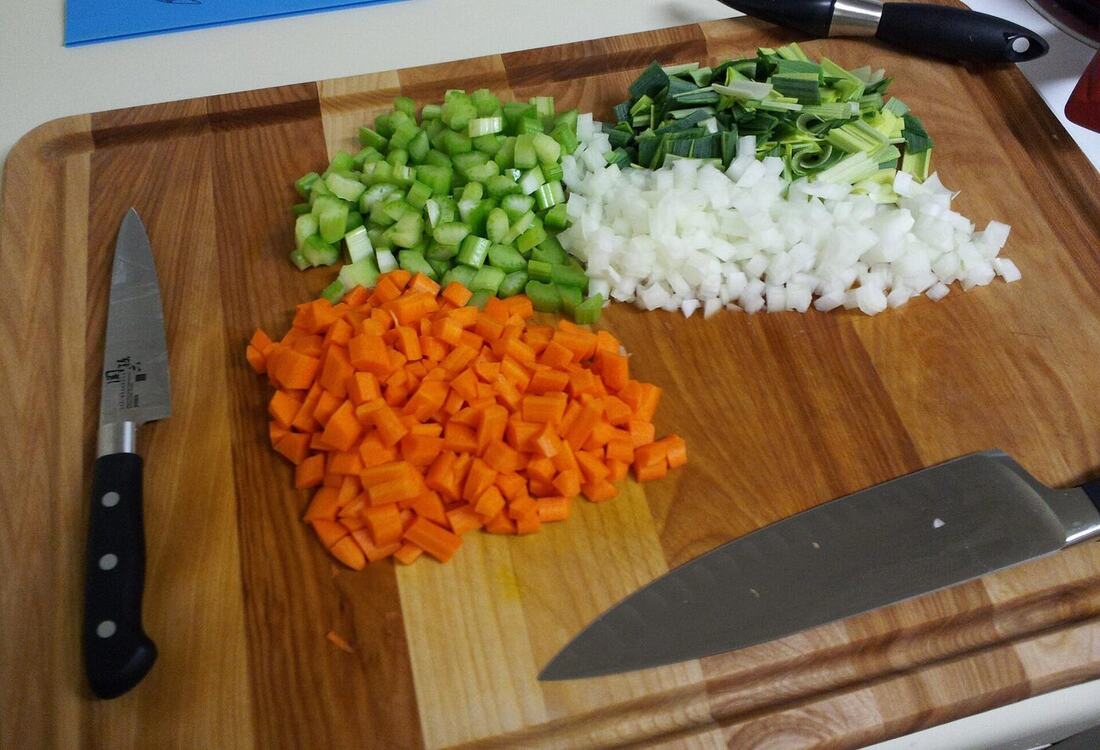
Stock isn't made. It's accumulated. Keep a large zip-lock bag in the freezer. Add: onion ends, carrot peels, celery leaves, mushroom stems, herb stalks, chicken backbones, shrimp shells, Parmesan rinds. When the bag is full, empty into a pot, cover with water, simmer 2-3 hours, strain. This replaces $3-4 cartons of boxed stock at near-zero cost. Parmesan rinds in stock add savory depth to any soup or braise.
7. Choose Recipes by Overlap
Don't plan seven unique meals. Plan seven meals that share ingredients. One bunch of cilantro across three dishes instead of buying it for a single taco Tuesday. A well-designed weekly grocery list with intentional overlap costs 20-30% less than seven individually optimized "good meals."
The Grocery List That Works
When you get to the store, don't trust your memory. This order of operations reduces impulse purchases significantly:
- Produce section first (vegetables, herbs). Fill half your cart here.
- Dairy and eggs. Get what's on the list.
- Proteins. Buy the planned proteins — already decided before the shop.
- Pantry. Flour, canned goods, rice, oil, vinegar.
- Skip the middle aisles if possible — that's where the processed-price markups live.
What "Budget Cooking" Isn't
It's not joyless. It's not deprivation. It's choosing legibility: seeing exactly what you're spending, why, and what you got for it. Most food spending leaks don't come from expensive cheese — they come from vague buying, substitution mid-recipe, and food that rots before use.
Tools that make this real
The Recipe Cost Calculator gives you a per-serving cost breakdown so you know which recipes genuinely save money. Out of an ingredient? The Substitution Smart tool finds a swap with the right ratio and dietary filters — keeping you on track without a store run.